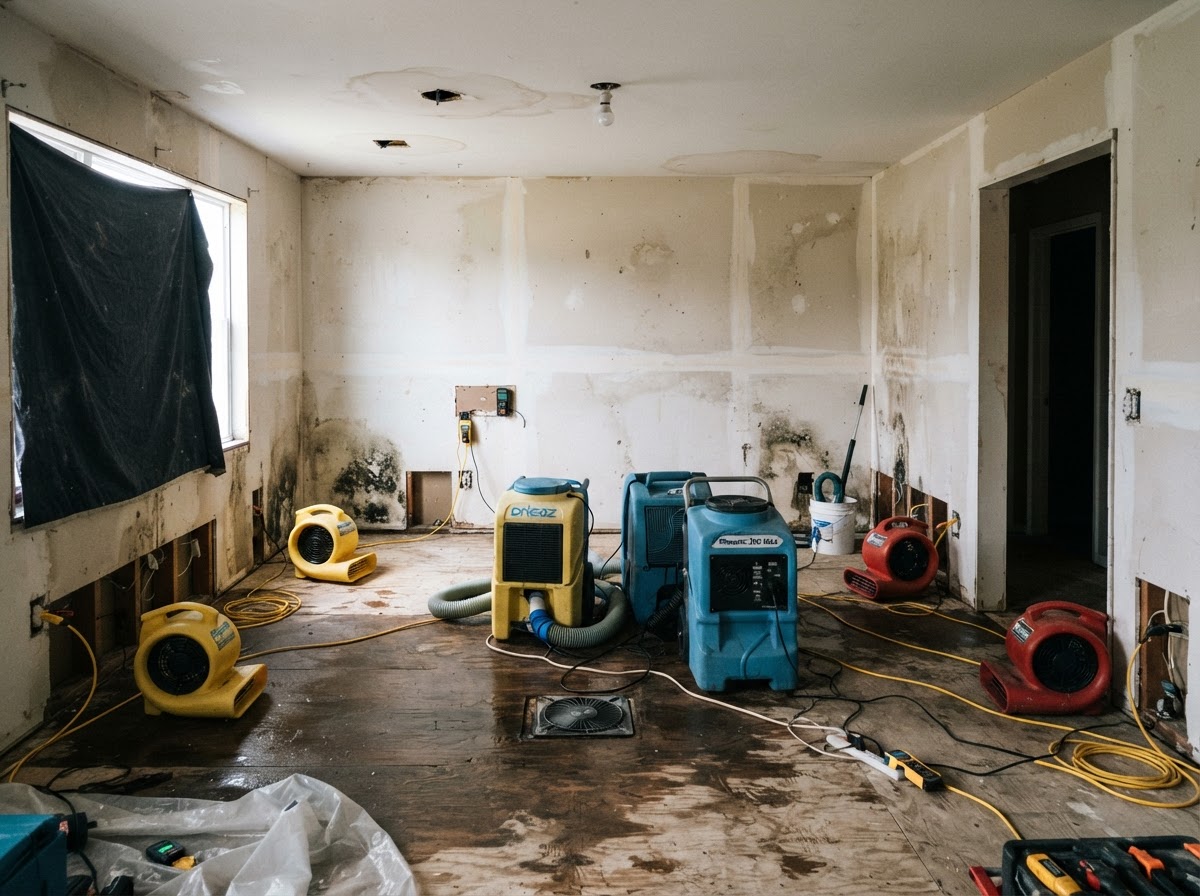
Mold Remediation in Westchester
Understand moisture correction, affected-material decisions and a documented remediation scope.
- Westchester County
- Written scope
- Independent contractor
Address moisture as well as visible mold
A mold concern should prompt questions about moisture and affected materials, not just surface appearance. A contractor's scope should explain the area evaluated, the proposed work and the limits of the assessment. This website does not diagnose health effects or determine whether a building is safe to occupy.
Where We Serve
Serving Westchester County
These location pages organize local information for Westchester communities; they do not confirm coverage or a staffed office.
What to include in the scope
Use these topics to compare proposals and identify work that needs a separate specialist.
Moisture investigation
Ask how the moisture source will be identified and corrected. A leak, condensation or other moisture problem may require a separate trade. Covering a stain or applying a coating without explaining the underlying condition is not a complete remediation plan.
Scope and material assessment
Describe where growth or odors have been observed and whether the area has had prior water damage. Ask which surfaces and concealed spaces are included in the assessment. Material removal should be justified by conditions and the proposed method, rather than a universal promise to save everything.
Work controls and cleaning approach
The contractor should explain access restrictions, management of affected materials and measures appropriate to the scope. Do not assume household fans or indiscriminate spraying are suitable. If HVAC contamination is suspected, discuss that concern before operating equipment.
Completion and future moisture management
Agree on completion criteria, the documentation to be provided and any role for a separate assessor. Ask what remains outside the contract. Keep records of source repairs and moisture observations so that recurring conditions can be addressed promptly.
What affects the estimate
| Cost factor | What to clarify | Pricing basis |
|---|---|---|
| Assessment scope and access | Ask for an itemized written scope | Property-specific estimate |
| Amount and type of affected material | Ask for an itemized written scope | Property-specific estimate |
| Work-area controls and disposal | Ask for an itemized written scope | Property-specific estimate |
| Moisture correction and verification | Ask for an itemized written scope | Property-specific estimate |
No dollar range or average is quoted here. The contractor must confirm assessment fees, equipment charges, exclusions and change-order terms before work is authorized.
What this helps you do
Understand the scope
Use this mold remediation guide to distinguish the immediate task from related repair and rebuilding work.
Compare written proposals
Request a description of included work, exclusions, charges and the evidence used to determine completion.
Know who is responsible
The selected independent contractor, not this referral website, would inspect, price and perform the work.
A practical sequence for discussing the job
- 1. Describe conditions
Share the address, timing, apparent source and safety concerns without entering a hazardous space.
- 2. Review the assessment
Ask what was inspected, what remains uncertain and which trades may be needed.
- 3. Agree on the scope
Review the written proposal, pricing basis, exclusions and schedule before authorizing work.
- 4. Keep the records
Retain photographs, readings where provided, invoices and the contractor's completion notes.