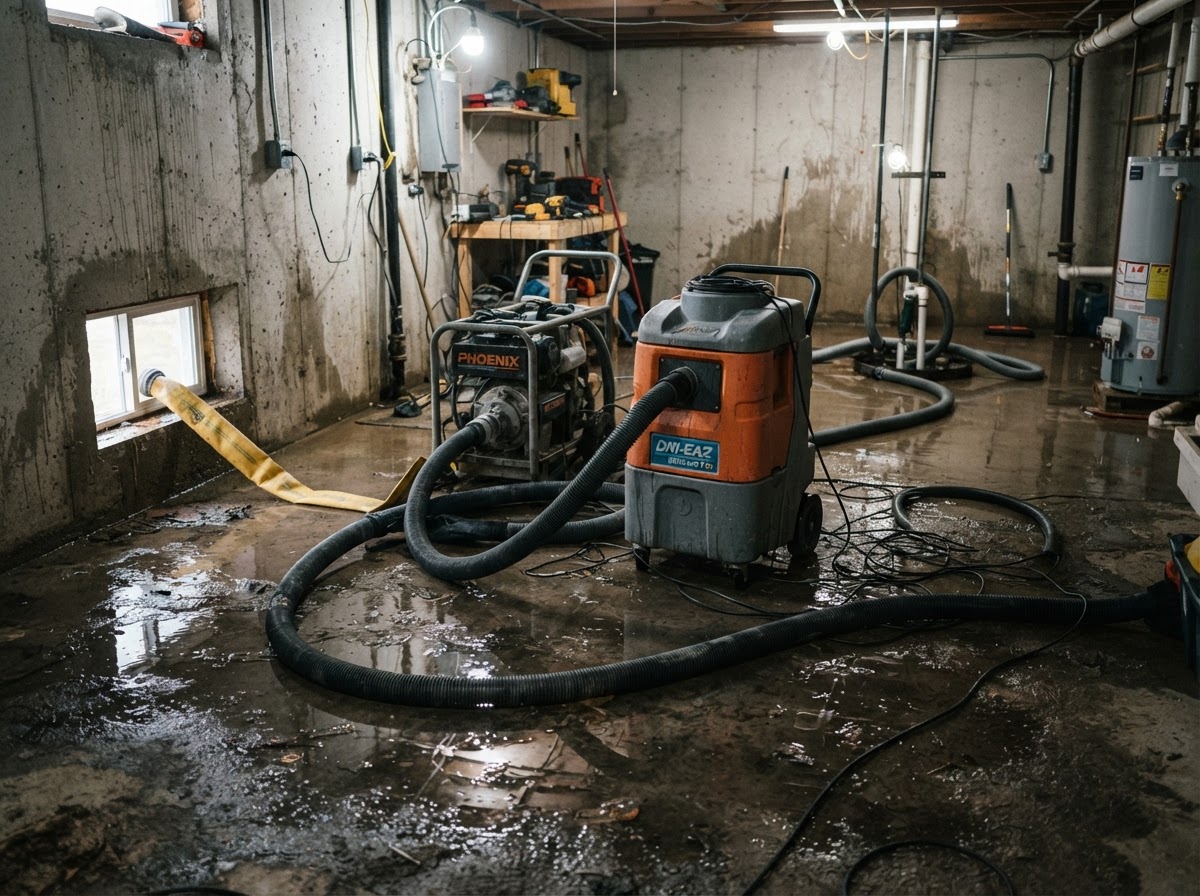
Flooded Basement Cleanup in Westchester
Understand basement water removal, affected contents, drying and recurring source questions.
- Westchester County
- Written scope
- Independent contractor
Separate basement cleanup from prevention
Basement water can arrive through plumbing, drainage problems, seepage or other paths. The visible location of the water does not reliably identify the source. Cleanup should be coordinated with an assessment of how water entered and whether it is safe to access the space.
Where We Serve
Serving Westchester County
These location pages organize local information for Westchester communities; they do not confirm coverage or a staffed office.
What to include in the scope
Use these topics to compare proposals and identify work that needs a separate specialist.
Entry conditions and water source
Describe the water level, when it appeared and whether entry continues. Tell the contractor about electrical equipment, mechanical systems and suspected sewage before arrival. Do not enter an unsafe basement merely to collect photographs or move equipment.
Contents and access planning
Identify storage, furniture, appliances and finished rooms that may obstruct access. Ask how belongings will be documented, moved, separated and evaluated. Keep a record of items proposed for disposal, while leaving contaminated or unstable materials to the appropriate professionals.
Walls, floors and concealed moisture
A dry-looking floor does not establish that wall cavities, insulation or flooring layers are dry. Ask which assemblies will be assessed and how the contractor will decide between retaining and removing materials. The scope should explain limitations where surfaces cannot be inspected.
Recurring-water follow-up
Sump work, foundation repairs, grading, drainage and waterproofing may be outside the cleanup contract. Request a clear handoff if a different trade is needed. A cleanup estimate should not be presented as a guarantee that the basement can never take on water again.
What affects the estimate
| Cost factor | What to clarify | Pricing basis |
|---|---|---|
| Basement access and water volume | Ask for an itemized written scope | Property-specific estimate |
| Stored contents and finish materials | Ask for an itemized written scope | Property-specific estimate |
| Removal and drying scope | Ask for an itemized written scope | Property-specific estimate |
| Separate drainage or source repairs | Ask for an itemized written scope | Property-specific estimate |
No dollar range or average is quoted here. The contractor must confirm assessment fees, equipment charges, exclusions and change-order terms before work is authorized.
What this helps you do
Understand the scope
Use this flooded basement cleanup guide to distinguish the immediate task from related repair and rebuilding work.
Compare written proposals
Request a description of included work, exclusions, charges and the evidence used to determine completion.
Know who is responsible
The selected independent contractor, not this referral website, would inspect, price and perform the work.
A practical sequence for discussing the job
- 1. Describe conditions
Share the address, timing, apparent source and safety concerns without entering a hazardous space.
- 2. Review the assessment
Ask what was inspected, what remains uncertain and which trades may be needed.
- 3. Agree on the scope
Review the written proposal, pricing basis, exclusions and schedule before authorizing work.
- 4. Keep the records
Retain photographs, readings where provided, invoices and the contractor's completion notes.