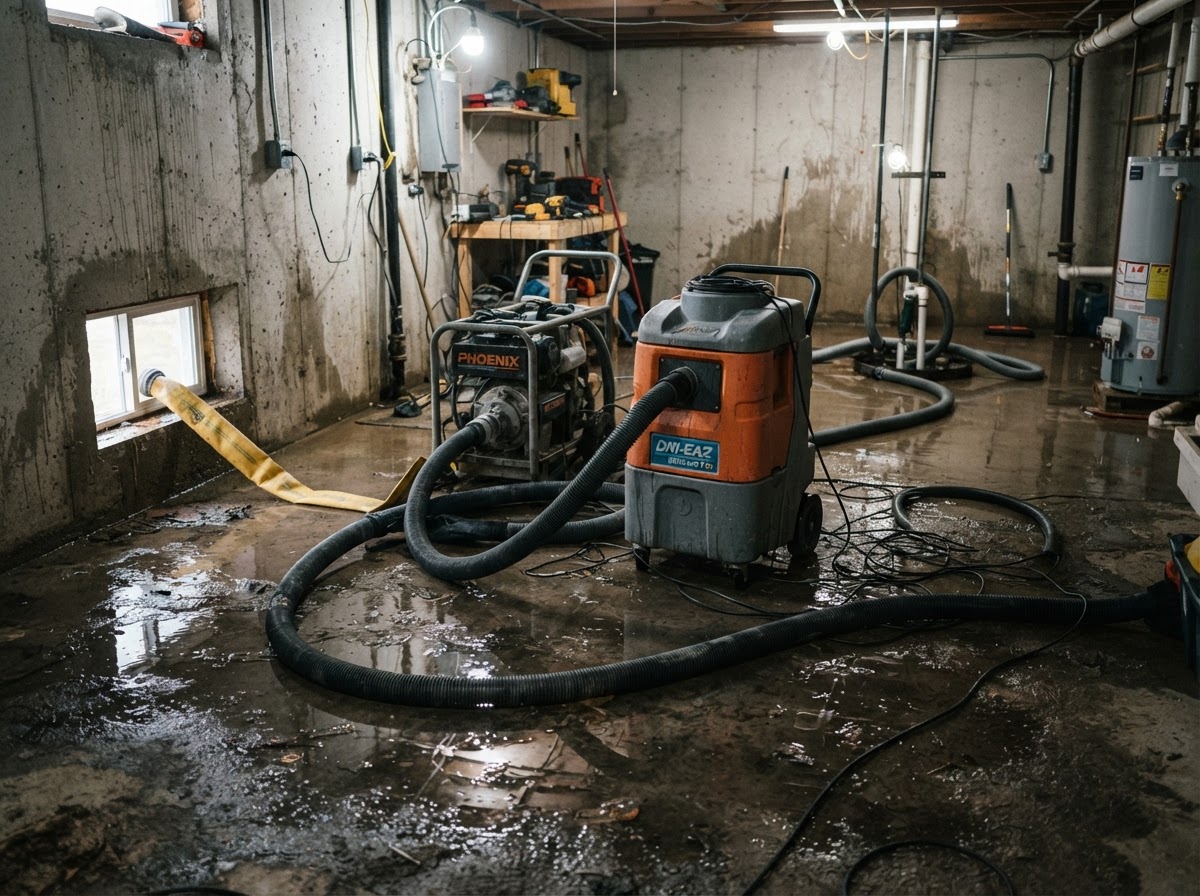
Emergency Water Removal in Westchester
Prepare for urgent water extraction and the drying assessment that follows.
- Westchester County
- Written scope
- Independent contractor
Understand urgent extraction and what follows
Emergency water removal describes prompt extraction work when a property has unwanted standing water. Safe access, source conditions and an independent contractor's schedule must be established first. An emergency service name describes the type of work, not an assurance of a specific arrival time.
Where We Serve
Serving Westchester County
These location pages organize local information for Westchester communities; they do not confirm coverage or a staffed office.
What to include in the scope
Use these topics to compare proposals and identify work that needs a separate specialist.
Initial information and triage
Give the contractor the property address, observed water level, affected rooms and whether water is still entering. Mention possible sewage, electrical hazards or structural concerns immediately. A remote conversation can organize a visit but cannot replace an on-site assessment.
Equipment and safe access
The contractor should determine appropriate extraction equipment and access arrangements. Clarify requirements for parking, hoses, power and entry permissions. Do not move into standing water or operate electrical equipment merely to speed up the contractor's arrival.
Extraction scope
Ask which rooms and accessible areas are included and how removed water will be managed. Extraction addresses accessible liquid water; it does not automatically address wet insulation, wall cavities, flooring systems or contaminated materials. Those decisions need a separate assessment.
Transition to drying
Before the extraction visit ends, clarify whether drying equipment, monitoring and material removal are included. Ask for a written next-step plan, equipment charges and responsibilities. An apparently clear floor should not be treated as proof that the building is ready for finish repairs.
What affects the estimate
| Cost factor | What to clarify | Pricing basis |
|---|---|---|
| Water volume and access | Ask for an itemized written scope | Property-specific estimate |
| Extraction equipment and labor | Ask for an itemized written scope | Property-specific estimate |
| After-hours charges if applicable | Ask for an itemized written scope | Property-specific estimate |
| Subsequent drying and material work | Ask for an itemized written scope | Property-specific estimate |
No dollar range or average is quoted here. The contractor must confirm assessment fees, equipment charges, exclusions and change-order terms before work is authorized.
What this helps you do
Understand the scope
Use this emergency water removal guide to distinguish the immediate task from related repair and rebuilding work.
Compare written proposals
Request a description of included work, exclusions, charges and the evidence used to determine completion.
Know who is responsible
The selected independent contractor, not this referral website, would inspect, price and perform the work.
A practical sequence for discussing the job
- 1. Describe conditions
Share the address, timing, apparent source and safety concerns without entering a hazardous space.
- 2. Review the assessment
Ask what was inspected, what remains uncertain and which trades may be needed.
- 3. Agree on the scope
Review the written proposal, pricing basis, exclusions and schedule before authorizing work.
- 4. Keep the records
Retain photographs, readings where provided, invoices and the contractor's completion notes.